Sleep Paralysis in teenagers

Sleep paralysis is when you can’t move right before falling asleep or waking up. It’s temporary. As you sleep, your brain helps the muscles in your arms and legs relax. With sleep paralysis, you’re stuck between sleep phases. Finding the source of your symptoms and addressing them can help you avoid future episodes.
Care at Cleveland Clinic
ContentsOverviewSymptoms and CausesDiagnosis and TestsManagement and TreatmentOutlook / PrognosisPreventionLiving With
Overview
What is sleep paralysis?
Sleep paralysis is when you can’t move any part of your body right before falling asleep or as you wake up. It happens when your body is in between stages of sleep and wakefulness. An episode is temporary and only lasts for a few seconds to a couple of minutes. It’s a type of parasomnia.
You’ll likely feel scared or anxious during a sleep paralysis episode. When it ends, you may feel confused because you’ll regain movement of your body as if nothing happened.
Even one sleep paralysis episode can make you nervous about going to sleep. This can affect how you feel and function during the daytime.
There’s no treatment available to stop a sleep paralysis episode when you’re in the middle of one, but treatment is available to reduce how often episodes affect you.
Is sleep paralysis dangerous?
Sleep paralysis isn’t dangerous, but it can cause emotional distress during an episode. Some cases of sleep paralysis link to other sleep disorders, so let a healthcare provider know if you’re not sleeping well.
How common is sleep paralysis?
An estimated 30% of people around the world experience at least one sleep paralysis episode within their lifetimes.
Symptoms and Causes
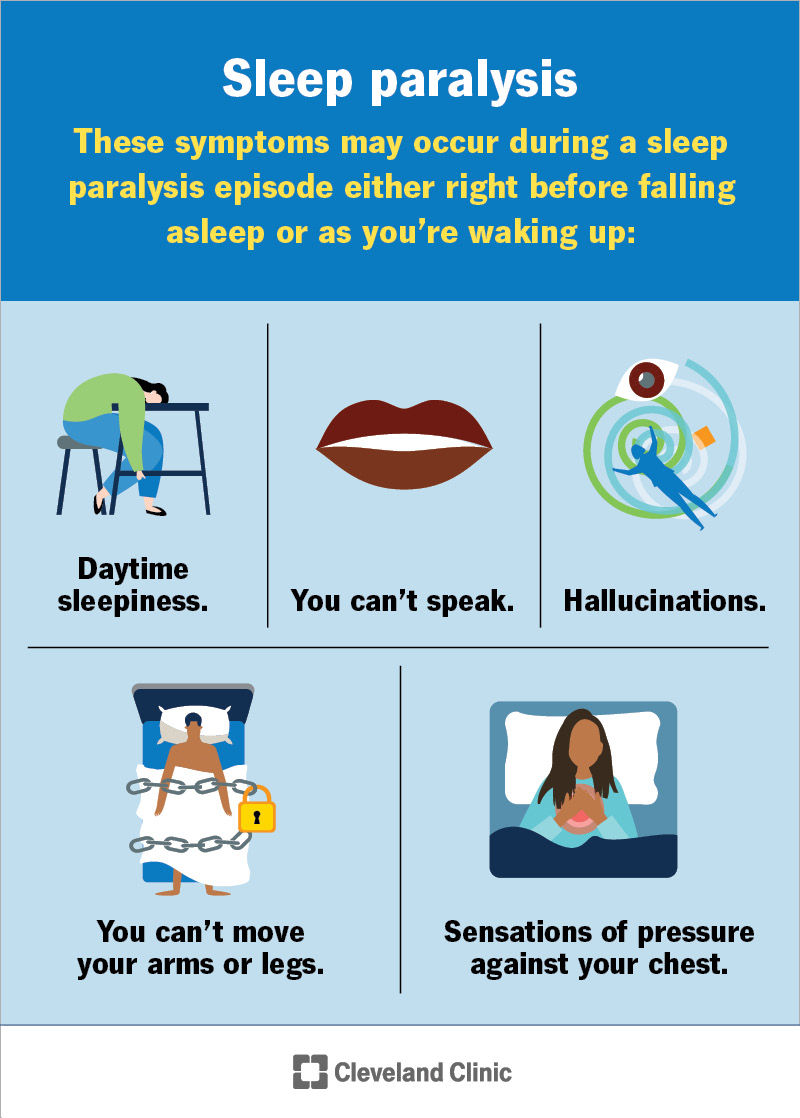
What are the symptoms of sleep paralysis?
You may experience the following symptoms during a sleep paralysis episode either right before falling asleep or as you’re waking up:
- You can’t move your arms or legs.
- You can’t speak.
- Sensations of pressure against your chest (suffocation) or moving out of your own body.
- Hallucinations (like there’s a dangerous person in your room).
- Daytime sleepiness.
What does sleep paralysis feel like?
During a sleep paralysis episode, you’re aware of your surroundings but can’t move or speak. You can still move your eyes and breathe. You may feel:
- Fear.
- Panic.
- Helplessness.
How long does sleep paralysis last?
The length of time you’ll experience a sleep paralysis episode varies. It could only last for a few seconds or up to 20 minutes. It usually only lasts a couple of minutes.
What happens if you wake someone up during sleep paralysis?
You can safely wake someone up during a sleep paralysis episode. The person having an episode may wake up fully and regain movement when you touch or talk to them. Someone in a sleep paralysis episode won’t be able to tell you what they feel or indicate with movement that they’re having an episode until they’ve recovered from one.